




Dental crowns
A beautiful solution to functional, structural and aesthetic challenges with teeth.
Crowns are just one effective solution for teeth with significant decay, broken teeth or teeth with large fillings which compromise their integrity.
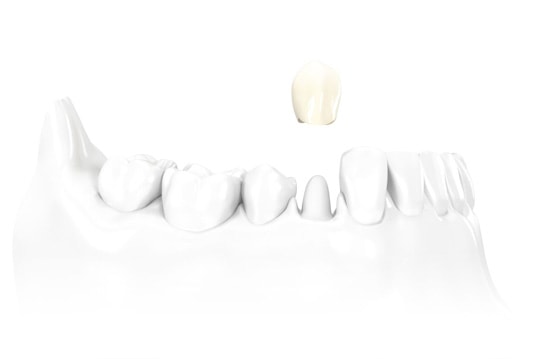
Taking timely action by defining your needs and treatment, crowns can improve function, the way teeth look and reduce the advancement of other issues such as fractures or cracks in teeth.
Have other questions, like what is the cost of a dental crown?
Crowns: what are they?
A dental crown is sometimes referred to as a tooth crown or cap. Working like a helmet that fits snugly over and around a person’s natural tooth, the crown protects and reinforces a tooth’s structure.
Crowns can also help prevent a tooth from breaking or fracturing, particularly in teeth that have multiple fillings and cracks, or have undergone root canal therapy. In the case of root canal therapy, crowns also help seal the tooth, preventing bacteria from causing reinfection.
With precision and science pivotal in the design and construction of crowns, we place importance on the materials selected for this treatment. We encourage people who see us for crowns to understand the benefits and differences between porcelain, zirconia, ceramic and gold crowns.
Ceramic
Predominantly reserved for front teeth
Porcelain
Fused to metal (back teeth) or Fused to zirconia (front teeth)
Zirconia
Strong but not as strong as metal crowns
Gold
Strongest and most conservative option
If a heavily filled or damaged tooth has been bothering you, we’re happy to discuss your options, either at one of our signature comprehensive oral assessments, or a specific consultation relating to your concern, where we can outline the cost of a dental crown and if that’s what’s best for you.
Dental Crowns Benowa
A damaged, weakened or heavily restored tooth may require additional support to help protect its remaining structure. At Define Dental, we provide custom dental crown treatment on the Gold Coast to help restore the appearance, strength and function of compromised teeth.
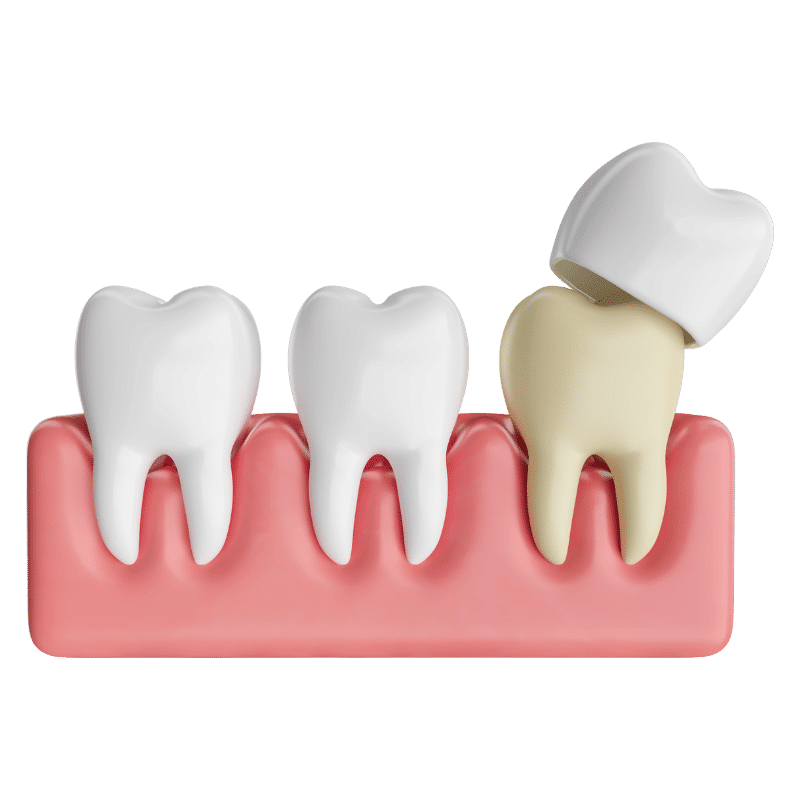
Dental crowns are a tooth-shaped restoration that fit over the existing tooth structure, like a helmet. They are commonly recommended for teeth that have been weakened by decay, cracks, large fillings, wear or previous dental treatments such as root canal therapy.
At Define Dental on the Gold Coast, one of our dentists will assess your individual needs and discuss whether a dental crown is a suitable treatment option for your smile.
What Is a Dental Crown?
A dental crown is a custom-made restoration that covers the visible portion of a tooth above the gum line. Sometimes referred to as a “cap”, a crown is designed to restore the shape, appearance and function of a tooth that may no longer be adequately supported by a filling alone.
Crowns can be made from a range of materials, including tooth-coloured ceramics, porcelain and even gold when high strength is needed. The material is chosen for your specific situation taking into account where the tooth is located in your dental arch and your aesthetic preferences. Other clinical requirements such as your bite and room available are also assessed when choosing the material for the crown.
During your consultation, one of our dentists will examine your whole mouth as well as the tooth in question, to then explain the most appropriate options for your situation.
When Might You Need a Dental Crown?
Dental crowns may be recommended when a tooth requires more support than a traditional filling can provide.
A crown may be suitable if you have:
A Cracked or Broken Tooth
Teeth that have experienced significant damage may benefit from additional protection to help restore their structure and function.
A Large Filling or Extensive Tooth Damage
When a tooth has lost a significant amount of natural structure due to decay or previous restorations, a crown may be considered to provide additional support.
A Tooth That Has Had Root Canal Treatment
Following root canal treatment, some teeth may require additional protection due to reduced structural strength.
A Worn or Weakened Tooth
Teeth affected by significant wear or damage may sometimes benefit from a crown to restore their shape and function.
At Define Dental we understand not all teeth need crowns. This is why we will always assess your tooth first before discussing whether a crown is the most appropriate option for you.
Benefits of Dental Crowns
Dental crowns can offer several benefits depending on your individual dental needs.
Potential benefits may include:
- Restoring Tooth Strength
A crown can help support a weakened tooth by covering and protecting the remaining tooth structure. - Improving Tooth Appearance
Tooth-coloured crowns are designed to blend naturally with your surrounding teeth. - Restoring Chewing Function
A well-fitted crown can help restore the function of a damaged tooth, allowing you to bite and chew comfortably. - Protecting Remaining Tooth Structure
Crowns can help protect teeth that may be vulnerable due to damage or previous treatment.
What To Expect During Dental Crown Treatment
The dental crown process typically involves a consultation, preparation appointment and placement of your final crown.
Initial Consultation
It's very important to assess your tooth first in combination with the teeth around it and your bite. I addition to this assessment a dental x-ray is taken to check the health and condition of your tooth.
Preparing Your Tooth
During treatment we make sure you're comfortable first to then carefully and precisely prepare the tooth so the new crown will fit securely over the remaining structure. A temporary crown is made so that the tooth is comfortable and protected between appointments.
Creating Your Custom Crown
At Define Dental we use both impressions and digital scanning of the prepared tooth to craft a custom made crown designed to fit your smile and bite.
Crown Placement
Once your custom crown has been crafted especially for you, we will always check the fit and appearance first before securing it in place.

What To Expect During Dental Crown Treatment
The dental crown process typically involves a consultation, preparation appointment and placement of your final crown.
Initial Consultation
Your dentist will assess your tooth, discuss your concerns and determine whether a crown is suitable. This may involve dental X-rays or other assessments to understand the condition of the tooth.
Preparing Your Tooth
During treatment, your dentist will carefully prepare the tooth so the crown can fit securely over the remaining structure.
Creating Your Custom Crown
Your dentist will take impressions or digital scans of your tooth to help create a crown designed to fit your smile and bite.
Crown Placement
Once your custom crown has been created, your dentist will check the fit and appearance before securing it into place.
Types of Dental Crowns
Dental crowns are available in different materials, each with different characteristics.
Porcelain and Ceramic Crowns
Tooth-coloured ceramic crowns are commonly chosen when appearance is an important consideration, particularly for visible teeth.
Zirconia Crowns
Zirconia crowns are a strong, tooth-coloured option that may be suitable in certain situations.
Gold Crowns
Gold crowns are known for their exceptional strength and durability, making them a suitable option for restoring some back teeth where chewing forces are greatest.
The right choice will depend on factors including the location of the tooth, your bite, aesthetic goals and overall oral health. At Define Dental on the Gold Coast, one of our dentists will discuss suitable crown materials and explain which option may be most suitable for your tooth.
Caring for Your Dental Crown
Looking after your crown is similar to caring for your natural teeth.
To help maintain your oral health:
- Brush twice daily with fluoride toothpaste
- Use Dental Floss to clean between your teeth daily.
- Attend routine dental check-ups
- Avoid using your teeth to bite hard objects
Regular dental visits at Define Dental on the Gold Coast allow our dentists to monitor your crown and surrounding teeth over time.

Are Dental Crowns Right for You?
Every smile is different, and a dental crown may not be the right option for every tooth. During your consultation at Define Dental on the Gold Coast, our dentists will assess your tooth and explain all suitable treatment options.
If you have a damaged, cracked, weakened or heavily restored tooth, a dental crown consultation may help you understand the options available.
Contact Define Dental in Benowa today to discuss your dental crown options.
Frequently Asked Questions
How long does a dental crown last?
Crowns will generally last many years. The lifespan of a dental crown can vary depending on factors such as oral hygiene, bite forces, the material used and how well the crown is maintained. At Define Dental on the Gold Coast, our dentists can provide guidance based on your individual circumstances.
Does getting a dental crown hurt?
No, it does not hurt to get a dental crown. At Define Dental, our dentists will use local anaesthetic and appropriate techniques to help make the procedure as comfortable as possible. Some people may experience temporary sensitivity after treatment.
How do I know if I need a filling or a crown?
This depends on how much healthy tooth structure remains and the condition of the tooth. Smaller areas of damage may be suitable for a filling, while teeth with more significant structural concerns may require additional protection with a crown.
Are dental crowns noticeable?
Modern tooth-coloured crowns are designed to closely match the appearance of natural teeth. At Define Dental on the Gold Coast, our dentists will consider factors such as colour, shape and placement when planning your restoration.
Can a crown fix a cracked tooth?
A crown may be recommended for some cracked or weakened teeth, depending on the location and severity of the damage. One of our dentists will assess your tooth and discuss suitable options.
How many appointments are needed for a dental crown?
The number of appointments required depends on your individual treatment plan and the type of crown being placed. Some crowns require multiple visits for preparation, creation and final placement.